
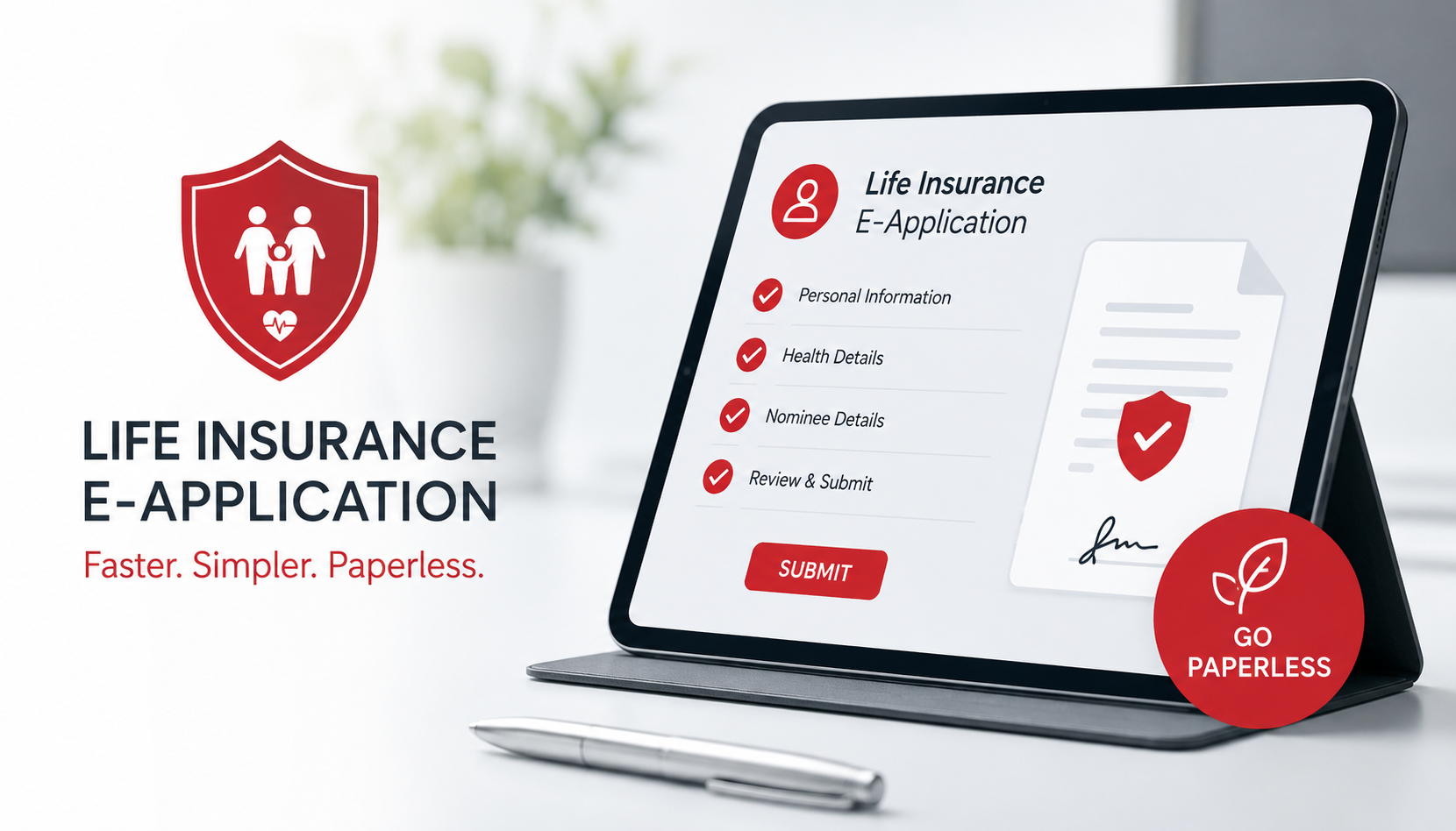
Life Insurance E-Application: How Going Paperless Speeds Up New Business
There is a moment every life insurance agent knows well. The application is complete, the client is ready, and then comes the paperwork. Pages to print. Fields to fill by hand. Signatures to chase. Documents to scan and email. And then the waiting begins — waiting for the carrier to receive it, log it, review it for errors, and finally begin processing.
This is the world of paper applications. And in 2026, it is a world that is costing carriers and agents real business every single day.
The shift to digital e-applications is not new — but the gap between agencies still running on paper and those fully digitized has never been wider. Here is what the move to paperless actually means in practice and why it has become a non-negotiable competitive advantage.
What Is a Life Insurance E-Application?
A life insurance e-application is a fully digital replacement for the traditional paper application process. Instead of printing, handwriting, scanning, and mailing — the entire application is completed, signed, and submitted electronically through a secure platform.
Modern life insurance e-application platforms go far beyond simply digitizing a paper form. They include:
- Reflexive questioning that adapts based on the applicant’s answers
- Real-time data validation that catches errors at the point of entry
- Integrated e-signature capabilities for all parties
- Automatic ACORD data formatting for carrier submission
- Real-time application status tracking for agents and applicants
The result is an application experience that is faster, cleaner, and significantly less prone to the errors that create NIGO — Not In Good Order — rejections.
The Real Cost of Paper Applications
Most agencies that still rely on paper applications underestimate what it is actually costing them. The costs are both direct and hidden:
NIGO Rates Industry data consistently shows that paper applications have dramatically higher NIGO rates than digital submissions. Every NIGO means a delayed case, additional agent follow-up, and a frustrated client who may reconsider their purchase entirely.
Placement Rate Impact There is a well-documented relationship between application-to-issuance speed and placement rates. The longer the process takes, the more opportunities there are for a client to change their mind, have a competing carrier approved first, or simply lose interest. Speed closes business.
Agent Time Drain Every hour an agent spends chasing missing information, re-submitting corrected applications, or following up on paper case status is an hour not spent prospecting, selling, or serving existing clients.
Compliance Risk Paper records are harder to store securely, harder to audit, and harder to produce on demand when regulators come asking. Digital applications create clean, timestamped audit trails automatically.
How E-Applications Accelerate New Business
The difference between paper and digital is not incremental — it is transformational in several specific ways:
Point-of-Entry Validation Smart e-application platforms use reflexive logic to guide applicants through only the questions relevant to their specific situation. Required fields are enforced in real time. Contradictory answers are flagged immediately. By the time the application reaches the carrier, it is complete and clean.
Integrated E-Signature Chasing wet signatures on paper documents is one of the biggest sources of case delay in life insurance. Digital e-signature capabilities built into the eApp and eDelivery platform eliminate this bottleneck entirely — all parties can sign from any device, anywhere, in minutes.
Straight Through Processing Enablement A clean digital application is the essential first step toward straight through processing. Without a quality digital submission at the front end, automated underwriting and instant issuance at the back end are impossible. The e-app is where STP either starts or stalls.
Real-Time Status Visibility Agents no longer need to call carrier service lines to find out where a case stands. Digital platforms provide real-time case status that agents and clients can track — reducing inbound calls to carrier operations and improving the overall experience for everyone involved.
What to Look for in an E-Application Platform
Not all e-application platforms are created equal. When evaluating options, agencies and carriers should prioritize:
Multi-Carrier Support Can the platform submit to multiple carriers without requiring separate logins and separate workflows for each one? Multi-carrier capability is essential for independent distribution.
Drop Ticket Functionality A drop ticket allows an agent to initiate an application with minimal information and hand off the completion to a call center or the applicant directly. This is particularly valuable for term and simplified issue products where speed is critical.
Integration with Underwriting and PAS The e-app platform must connect cleanly with the carrier’s life insurance underwriting systems and policy administration system — otherwise the digital front end simply creates a new manual handoff point rather than eliminating one.
Mobile Optimization Agents increasingly work with clients in person, at kitchen tables, in coffee shops. The platform must work flawlessly on tablets and smartphones — not just desktop browsers.
The Bottom Line
Going paperless in life insurance is not about chasing a technology trend. It is about removing friction from a process that is already friction-heavy — and that friction is costing carriers and agencies placed business every single month.
The agencies and carriers that have made the full transition to digital e-applications are not looking back. Faster issuance, lower NIGO rates, better placement, and happier agents are not marginal improvements. They are transformational business results that compound over time.
Ready to explore leading e-application platforms for your agency or carrier? Visit InsurTech Express for vendor comparisons, expert resources, and the latest solutions in life insurance technology.