Next Gen Personalization Methodology for Life Insurance

Slide1 11 copia

Consumers have come to expect personalized, multichannel user experience from companies that they interact with. Most industries are now able to offer their customers products that match their immediate and long-term needs wrapped in tailored messaging that speaks their language and caters to their lifestyle, behavior, attitude, and preferences. This the basis for the data driven, ‘People Like You’ marketing strategy that is commonly used throughout B2C campaigns.

.

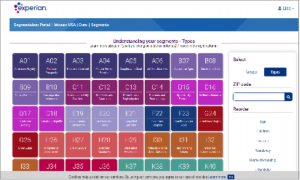
Most life insurers currently use traditional segmentation tools such as Tapestry (Esri), Mosaic (Experian), and even Facebook, as the basis for their marketing strategy. This allows insurers to personalize their marketing activities and products in the Life Insurance vertical. In short, Tapestry, and the like, classify people into over 60 groups and types based mainly on zip code data. This cohort is creating unique live style segments relating to demographics and socioeconomic characteristics. Tapestry, for example, describes US neighborhoods in easy-to-visualize terms, ranging from “American Royalty” to Heartland Communities.

.
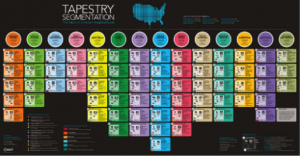
tapestry          esperian

.

But what if you could add a totally new dimension to traditional classification in the form of recurring Behavioral Patterns to create hundreds of thousands of additional granular segmentations, providing a full and complete insight into your Book of Business?

.

Atidot leverages on these powerful segments with its AI and Machine Learning capabilities and augment a behavioral pattern to the data. We use external information from public databases as well as internal sources such as CRM systems. This information will enrich your database and provide additional insight into your Book of Business or creating a platform for new marketing strategies that are more accurate, potentially enabling marketing campaigns based on real time customer data. Occupation, proximity of hospitals, day of premium payment, investment patterns etc., can impact the Lifetime Value of your policyholders and can help create additional revenue sources.

.

This is the next generation platform for product personalization and product offering for tailored marketing campaigns, new risk modeling, lapse strategy and more. Moreover, machine learning technology can keep learning as policyholders’ actions are recorded to create more accurate and additional profiles, thus detecting the most profitable potential customers. This is the basis of our Nano-Segmentation Methodology.

.

For example, one behavioral pattern is the client’s payment date. Different dates may have different meanings. For instance, if someone is repeatedly late in their premium payments, the machine can find a pattern such as “these people, if their age is between 40-50, tend to lapse within 5 years”. This behavioral pattern could have a totally different meaning if they are between the ages of 20-30. Here it might suggest that they are busy successful people who don’t have enough time to attend to their finances. Yet they may match the most profitable policyholder groups that insurers have.

.

Another example of a Behavioral Pattern relates to sensitivity to financial market trends. For instance, when the Bond Index is on the rise, some people tend to invest more in their own pension funds. AI and ML technology tie such behavior patterns into different groups, such as the trendsetters segment (a traditional segmented group) that potentially tends to invest when the Bond Index is up (based on the correlation between two sets of behaviors) indicating that they have a financial orientation and can be treated in two different ways. If the client owns a policy with a 4% guaranteed premium that was issued years ago, they should be encouraged not to lapse that policy. When the Bond Index is down, insurers might consider selling more protections to that segment.

.

On a strategic level, if you are catering to this specific group you might launch a marketing campaign in channels that cater to this specific group of trendsetters with a financial orientation, for instance, via bloggers associated with style, targeted ads in fashion publications, direct email, etc. The possibilities are endless.

.

So, since AI and ML capabilities can be trained to translate real time events into real time data, this newfound segmentation becomes the platform for tailored marketing targeting that can factor any real time relevant data. For instance, changes in the COVID 19 geographic spread can impact the demand for life insurance, generating real time targeting on a weekly or monthly basis, through traditional channels such as email campaigns, social networks etc.

.

Key Benefits: 

– Tens ot thousands and up to millions of new segmentations.

– A dynamic software platform vs. static commonly used tools.

– Life insurance-specific software, catering to the life insurance segmentation

– An accurate platform for new marketing strategies

– Behavioral-based on top customary data driven – providing  a competitive advantage.

– Maximizing the value for your existing customers.

.

Resulting in deep understanding of the customer base and full optimization of the Book of Business, as well as new revenue streams generated from a specific target audience. This next generation approach will set the basis for marching your company into the challenges of the next decade that are all about customer experience and profitability.

Solving Unique Pain Points For Life Insurance New Business And Underwriting

Broker World qtq80-RQWy5T-768x512

By Ken Leibow

Published: August Broker World Magazine


There are a lot of changes happening in the life insurance industry because of COVID-19—market environment, types of insurance products, processes, and technology. As these changes are evolving, there are unique challenges impacting new business and underwriting. I want to show you some innovative solutions solving these pain points.


Life Carriers Need Predictive Underwriting in the COVID-19 World
In a perfect world insurance companies are changing their strategy in a void, a company changes pricing while the industry is static and the company can evaluate the impact on the policyholders and the profitability of the company over time. Due to new regulations, principle-based reserving (PBR) and a new standard mortality table, the 2017 Commissioners Standard Ordinary (CSO) Table, and now due to COVID-19, companies are changing pricing while the rest of the industry is also changing pricing. To be able to trace the impact of a change, to simulate strategies and make decisions quickly, companies must have reliable data and predictive technology (such as Artificial Intelligence and Machine Learning) to evaluate the impact in real time.


Companies are building complex products, and sophisticated underwriting protocols and benefit programs, to attract specific distributors, producers and customers or specific market segments or specific risks. Being able to simulate what-if scenarios and build strategies based on data allows companies to be more scientific and therefore generate better results. COVID-19 disrupted the way insurance companies onboard a policy, there is a move to eApp, underwriting is done remotely, the ability to take liquids has decreased. Companies that can predict the probability a policy will be placed and what would be the biggest driver to improve placement probability can help companies optimize their operation, reduce waste, and improve consumer satisfaction with the process.


iPipeline,® a leading provider of cloud-based software solutions for the life insurance and financial services industry, has integrated its InsureSight Case Analytics Platform with Atidot’s Predictive Analytics Models to analyze the impact of product and pricing changes based on prior sales performance and industry data. The ability to predict future performance based on product selection, producer group, producer, location, demographic and other critical factors, will enable life carriers to adjust product, pricing, or distribution strategy dynamically to optimize market penetration.


Transform Paper Apps into Digitized In-Good-Order Applications
In an ideal world we all want our agents to use eApp for submitting life insurance applications instead of paper so that they are submitted in-good-order, processed quicker, and automated as much as possible without having to manually handle the case. There are times when agents will paper-out of an eApp for various reasons or send paper apps to a BGA sending it down that NIGO, slow, expensive path. But now there is a solution to get the app back on track on the data highway. PaperClip, Inc., has a platform called Mojo. This is an innovative cloud-based service that digitizes the life insurance paper application from handwritten or typed text with 99.9 percent accuracy transforming it to data and data transactions.


Let’s say, for example, an agent sends a handwritten paper application to the BGA. The BGA then scans the paper application into Mojo, securely transforming the application into data. The BGA can use Mojo for several purposes. Mojo can send data to the agency management system (AMS) to auto-create the case. At the same time, Mojo can file the documents into the BGA’s document management system like PaperClip’s VCF System. And the application data transformed by Mojo can be sent to an eApp platform automatically to get it back on track and in good order. iPipeline has partnered with PaperClip whereby Mojo is seamlessly integrated into iGO eApp. iPipeline calls the integrated solution iGO Link. If the agent had papered-out of iGO, they still would have the opportunity from the BGA’s website to access iGO Link and get it back on track into the eApp process.


BGA’s can Reign in the Costs and Turn Around Times for Informals
Informal underwriting has not kept pace with the advances in formal underwriting. For decades there have been two forms of informal underwriting practiced by agents and agencies. One way, all the collection of health information is collected by the agency before formally presenting a prospect to carriers. When an agency does not have the resources of a support team nor a strong, cooperative relationship with the prospect, an agency will use a victim carrier’s formal underwriting to prequalify a prospect. With this second way, an agent’s investment may only be to find the carrier with the lowest Super Preferred rate, get a ticket app and let the carrier, the agency and the prospect do all the work until the carrier can come back with an offer. Often this offer is not Super Preferred and underwriting and selling starts from here.


Both processes are expensive and disruptive. Employee Pooling (EP) has a better solution. They can eliminate weeks of physical and emotional toll on all parties. EP’s accelerated informal platform uses data technology and human capital to give distributors on-demand access to the tools traditionally reserved for insurance companies. Tom Gray, CEO of Employee Pooling, said, “I have been on the distribution side of this industry for 30 years. This is how it has been. I have been determined to obtain solid underwriting data to use to get a meaningful tentative offer that can be counted on and reign in the costs and turn-around time. Our platform can find rich medical data, have it assessed by technology and our medical team and deliver an underwritable package, often within 24 hours. This way, the EP way, gives the agency the tools to put a summarized case up for bid and find the right carrier able to offer a premium that can be placed. The rest is a formality.”


eApp and Auto-Underwriting using an Omni-channel Sales Model
Life Insurance is still sold and not bought, however instant issue or simplified issue products can be quoted and applications electronically submitted through a consumer facing solution. This is not a carrier direct-to-consumer model because we are maintaining the agent ecosystem for the purpose of having the agent available for questions and for upselling and cross selling. There is a trend with several vendors today providing these eApp/Sales tools for agents and agencies. Management Research Services (MRS) has a unique platform that is No-Code, fully configurable electronic application platform. It can streamline requirement gathering during the application process, gathering data in the background (in real time) to reduce time with the applicant and provide an instant underwriting decision. Utilize the omni-channel approach to customize your sale, whether in an e-app, tele-app, or both. MRS’ seamless case management provides transparency for your agency and agents so they know where every applicant stands in the process.
COVID-19 and the unstable economy, with service providers who may or may not be in business tomorrow, it is time for BGAs and IMOs to take more control of their business by adding a call center to their agencies. Some of the benefits include increased customer satisfaction, higher conversion rate in completing submitted applications, and higher placement ratio. You also get an automated drop ticket experience that you control. A BGA who changes their model by adding a call center will get more efficiency and reduced costs in agent recruitment, freeing up specialists to focus on handling calls that utilize their expertise. There is consistent service when adding a call center which results in overall improved call quality.


BGAs and IMOs Can Take More Control of their Business by Adding a Call Center

A BGA will need a software solution that can seamlessly automate the drop ticket fulfillment process for the call center. ApplicInt’s CallComplete software is an end-to-end digital platform for a call center, already plugged into the carrier’s fulfillment process for completing the app with a client interview for term life drop tickets. CallComplete allows you to take control of the drop ticket process and better service your agents, automatically receiving the drop ticket from the eApp platform and then the carrier’s script, process, and voice signature are all integrated into CallComplete for either scheduling the exam or automatically ordering RX, MIB and MVR for an accelerating underwriting process.


Features of a Call Center for a BGA and IMO:

  • Real time assistance for the agent to help complete the drop ticket;
  • Warm transfer agent to client;
  • Call center can initiate the interview without a drop ticket;
  • Agent recruitment (prospecting);
  • Promoting new products and services, then handing over or scheduling to a specialist;
  • Front line to support agents for high level questions; and,
  • Agent pre-script before the carrier compliant interview and post-script cross-selling and agent referrals.


Yes, the digital sales model, whether agent-facing or consumer-facing, is being pushed in a direction requiring flexible, easy to use new business eApp tools with products and underwriting that can automatically make an underwriting decision when possible. This is driven by new market conditions like COVID-19 and Millennials. Whenever there is a break in the process there needs to be a doorway to get it back on track. These solutions enable life carriers, BGAs and agents to reduce their operational costs and become more efficient focusing on growing sales.