Management Research Services Unites With American Enterprise Group

AEG+website

.

MRS – AEG Partnership Press Release

.

American Enterprise Group, Inc. (AEG) announced today it will be partnering with Management Research Services, Inc. (MRS), a global leader in insurance automation and technology solutions, announced today the release of a new electronic application system for life and health insurance policies.  The new technology will allow insurance professional to complete and submit application for straight through processing and instant policyholder decisioning. The platform will allow for real-time processing 100% in-good-order applications. This partnership will empower the divisions of AEG to service and offer real time policy issuance to our distribution and policyholders.

.

The partnership with MRS is a part of an ongoing, companywide focus on innovation within AEG, and is a result of an earlier interaction with American Enterprise Ventures, LLC, which is a venture capital company backed by AEG that focuses on investments in early-stage startups in the insurance, finance, and healthcare industries.

.

“Representatives of American Enterprise Ventures discovered MRS at an innovation summit and were impressed with the new technologies the company offered,” explained Julie Larson, Chief Technology and Innovation Officer. “We were looking for a new rules and application processing platform to better meet our growing needs, so the American Enterprise Ventures team brought the potential solution to company leaders for further vetting. It was a great find for us.”  Brad Darnell, MRS Chief Technology Officer, says “At MRS we look for partners, not clients, and we could not have asked for a better one than AEG. Right from the beginning, we have developed a strong relationship with great collaboration between our organizations. This teamwork has led us to a multi-phased product rollout strategy in a short amount of time. Our approach not only supports AEG’s digital transformation goals but is also driving exciting innovation to our platform. We are grateful every day for the partnership that has been developed with this excellent company.”  GG Oncel, MRS Head of Customer Strategy & Growth, says “MRS is proud to have been chosen as the exclusive partner of AEG for its digital transformation efforts across product lines and distribution channels.  The teamwork between the two companies has been excellent resulting in an implementation process that has moved forward with great speed and efficiency.  The MRS No-Code platform has proven again that it can support highly complex application processes at any level of volume needed.  MRS places significant value in its partnership with AEG and is excited to showcase it to show how we can support the larger tier carriers in the US market and beyond.”

.

About American Enterprise Group, Inc.

.

American Enterprise Group, Inc., has multiple insurance company subsidiaries under the American Republic®, Great Western Insurance Company (GWIC®), and Medico® brands. These companies offer life and health insurance product solutions to help people secure their financial futures through various distribution channels and are licensed in 49 states, plus the District of Columbia. American Enterprise is based in Des Moines, Iowa, and employs approximately 450 people in its Des Moines, Iowa; Omaha, Nebraska; and Ogden, Utah, offices.

.

About American Enterprise Ventures, LLC

.

American Enterprise Ventures, LLC is a venture capital company backed by American Enterprise Group, Inc. American Enterprise Ventures’ investment strategy focuses on early-stage startups in the insurance, finance, and healthcare industries. With initial investments of up to $1 million, American Enterprise Ventures’ funds are typically made in seed to Series A round startups. For more information visit www.americanenterprise.com/aeventures.

.

About MRS

.

At MRS, we help clients transform change into a competitive advantage.  MRS provides a high-end technology product to life, health, and annuity insurance industries.  In today’s world where “the only thing constant is change,” that original vision has been expanded to include more services and technology capabilities designed to help clients adapt quickly and in a cost-effective way.  MRS has invested heavily in our technology platform to create a foundation for the next revolution in life insurance.  MRS’s No-Code platform gives you all the tools needed to build a highly secure, complex application that efficiently collects voice and electronic data without writing a single line of code.  The result is a vastly reduced time to market with no initial or ongoing maintenance costs making the total cost of ownership substantially lower than status quo solutions.  Our platform’s ability to support powerful reflexive logic makes the MRS rules engine extremely efficient in collecting all information needed to make a point-of-sale decision.  The capabilities and flexibility of our platform allow customers to use the MRS technology platform as their single solution or as a tool to support and enhance current technology solutions they already have in place.  For more info on MRS product e-Apps, please email GG Oncel at gg.oncel@mrsreps.com or visit the website at www.managementresearchservices.com.

Consumer Direct Life eApp While Maintaining The Agent Ecosystem

Next Gen Personalization Methodology for Life Insurance

Slide1 11 copia

Consumers have come to expect personalized, multichannel user experience from companies that they interact with. Most industries are now able to offer their customers products that match their immediate and long-term needs wrapped in tailored messaging that speaks their language and caters to their lifestyle, behavior, attitude, and preferences. This the basis for the data driven, ‘People Like You’ marketing strategy that is commonly used throughout B2C campaigns.

.

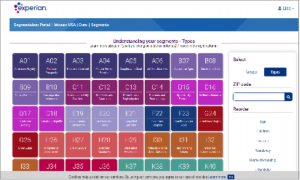
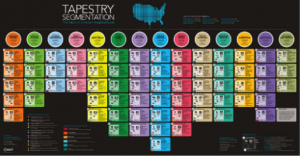
Most life insurers currently use traditional segmentation tools such as Tapestry (Esri), Mosaic (Experian), and even Facebook, as the basis for their marketing strategy. This allows insurers to personalize their marketing activities and products in the Life Insurance vertical. In short, Tapestry, and the like, classify people into over 60 groups and types based mainly on zip code data. This cohort is creating unique live style segments relating to demographics and socioeconomic characteristics. Tapestry, for example, describes US neighborhoods in easy-to-visualize terms, ranging from “American Royalty” to Heartland Communities.

.

tapestry          esperian

.

But what if you could add a totally new dimension to traditional classification in the form of recurring Behavioral Patterns to create hundreds of thousands of additional granular segmentations, providing a full and complete insight into your Book of Business?

.

Atidot leverages on these powerful segments with its AI and Machine Learning capabilities and augment a behavioral pattern to the data. We use external information from public databases as well as internal sources such as CRM systems. This information will enrich your database and provide additional insight into your Book of Business or creating a platform for new marketing strategies that are more accurate, potentially enabling marketing campaigns based on real time customer data. Occupation, proximity of hospitals, day of premium payment, investment patterns etc., can impact the Lifetime Value of your policyholders and can help create additional revenue sources.

.

This is the next generation platform for product personalization and product offering for tailored marketing campaigns, new risk modeling, lapse strategy and more. Moreover, machine learning technology can keep learning as policyholders’ actions are recorded to create more accurate and additional profiles, thus detecting the most profitable potential customers. This is the basis of our Nano-Segmentation Methodology.

.

For example, one behavioral pattern is the client’s payment date. Different dates may have different meanings. For instance, if someone is repeatedly late in their premium payments, the machine can find a pattern such as “these people, if their age is between 40-50, tend to lapse within 5 years”. This behavioral pattern could have a totally different meaning if they are between the ages of 20-30. Here it might suggest that they are busy successful people who don’t have enough time to attend to their finances. Yet they may match the most profitable policyholder groups that insurers have.

.

Another example of a Behavioral Pattern relates to sensitivity to financial market trends. For instance, when the Bond Index is on the rise, some people tend to invest more in their own pension funds. AI and ML technology tie such behavior patterns into different groups, such as the trendsetters segment (a traditional segmented group) that potentially tends to invest when the Bond Index is up (based on the correlation between two sets of behaviors) indicating that they have a financial orientation and can be treated in two different ways. If the client owns a policy with a 4% guaranteed premium that was issued years ago, they should be encouraged not to lapse that policy. When the Bond Index is down, insurers might consider selling more protections to that segment.

.

On a strategic level, if you are catering to this specific group you might launch a marketing campaign in channels that cater to this specific group of trendsetters with a financial orientation, for instance, via bloggers associated with style, targeted ads in fashion publications, direct email, etc. The possibilities are endless.

.

So, since AI and ML capabilities can be trained to translate real time events into real time data, this newfound segmentation becomes the platform for tailored marketing targeting that can factor any real time relevant data. For instance, changes in the COVID 19 geographic spread can impact the demand for life insurance, generating real time targeting on a weekly or monthly basis, through traditional channels such as email campaigns, social networks etc.

.

Key Benefits: 

– Tens ot thousands and up to millions of new segmentations.

– A dynamic software platform vs. static commonly used tools.

– Life insurance-specific software, catering to the life insurance segmentation

– An accurate platform for new marketing strategies

– Behavioral-based on top customary data driven – providing  a competitive advantage.

– Maximizing the value for your existing customers.

.

Resulting in deep understanding of the customer base and full optimization of the Book of Business, as well as new revenue streams generated from a specific target audience. This next generation approach will set the basis for marching your company into the challenges of the next decade that are all about customer experience and profitability.

The Future of Automation in Life Insurance

Blog+#3+image


The Future of Automation in Life Insurance

.

There are really four areas of technological revolution happening together and at once to reshape the industry: automation, artificial intelligence (AI), big data, and cloud. Combined and intertwined, they mark the current disruption that shapes any discussion on the future in life insurance

.

Cloud computing has been around since the 1960s, though only adopted for mainstream use in the last twenty years. Widespread cloud acceptance means uninterrupted access to data. If you think about it, this mirrors the same timeline for many types of records and databases. Twenty years ago, most medical records were not even electronic; the big push was to get industry-wide acceptance of electronic medical records by 2014. Constant access is a new phenomenon.

.

Big data means we have more complex data sets from new places. More connected devices in the world means more data. Think of late generation devices and the data they collect: exercise wearables, fitness apps, smart TVs, smart vehicles, and even surgically implanted medical devices collect information about you. The implications for the insurance industry are undeniably massive. Insurance companies will be able to leverage data assets for strategic decision making, sometimes in real time. Constant access to next-level data offers insurers new insights into risk mitigation, and new avenues to recognize and seize opportunities.

.

Such opportunities may be just in time to address generational challenges. Millennials have shown a general unwillingness to buy life insurance. Not only that, but they are less likely to join the insurance workforce. Millennials prefer the more lucrative tech-jobs.

.

Part of the reason why is that legacy industry entry-level jobs had long been filled with mundane, repetitive, routine-type tasks – the very same jobs that are being replaced by a combination of AI and automation. Underwriting is a perfect example. The job has traditionally required repetitive, time-consuming, manual processes that once provided a small army of young professionals with industry experience. Underwriting was a paperwork-laden task. Today, the desire for fast decisions combined with 24/7 access to increased data sources means the role can be performed electronically and instantly. It’s not uncommon for the technology firms that service insurers to process 19 out of 20 insurance applications immediately and without any human intervention.

.

Digital transformation across the industry has delivered business agility but transforming has been more about survival. 44% of policyholders surveyed in 2019 stated they would change carriers if they couldn’t access and service their account electronically.

.

The future of life insurance involves a heavy dosage of the same four ingredients: automation, AI, big data, and cloud working together to provide new growth opportunities with the same old-world concept of security. Look for more data, increased reliability, and immediate decisions made with less human intervention.

.

Ushering the industry into tomorrow are technology and automation firms like Management Research Services (MRS). MRS helps carriers streamline their application system with their no-code platform. Underwriting decisions can be made in just moments and at the point of sale. With voice and electronic signature capability, the MRS system allows for a time-to-issue of just a few minutes. For carriers seeking a technology partner that provides AI-based automated insurance services and solutions, learn more at www.managementresearchservices.com.
.