Blog

The World Of Electronic Health Records (EHR) For Life Insurance Underwriting

 .

Electronic Health Records (EHR) are the hottest trend in life insurance underwriting today. The growing accessibility and innovation by solution providers is transforming the life underwriting process. Understanding Electronic Health Records and the benefits are important. We will also explore how you get access to EHR and who is offering EHR services.

.

What is EHR and How to “Triage” the Data?

.
I first reached out to Drake Livada, life sales, and Nicholas Irwin, director of underwriting, at Verisk to educate on EHR and how it has impacted the industry today. As the COVID-19 pandemic adds risk to countless business and personal interactions, ways of life are shifting toward the virtual world. Suddenly caught up in this transformation, life insurers are urgently seeking electronic sources of information to enable a digital customer journey, and electronic health data is coming to the fore.

.

Electronic health data can be compiled from many sources and shared digitally through mechanisms such as health information exchanges (HIEs). Health data can be either structured data such as coded diagnosis (ICD), lab testing results with standardized values, and vital signs; or unstructured data, which often includes narrative style notes to document vital information such as visit summary, radiology results, or pathology results. Some types of electronic health data such as pharmacy, lab, and health claims are much more widely available and easier to use than electronic health records, but the latter can provide greater granularity to support a more refined view of mortality risk.

.

The health data information available within the EHR can create opportunities for the digitization of life insurance underwriting. Unfortunately, the structure—or lack of it—in the EHR presents challenges. For starters there are 15 different medical coding systems representing over one million different codes that need to be handled and processed. Even if one built a system to handle these over one million unique codes there is still the challenge of numerous medical coding errors, duplicate values, and transcription errors which requires a robust data validation system to handle. Moreover, many key rating elements, such as cancer stage and EKG interpretations, are only available in unstructured format requiring natural language processing in order to ingest.

.

Due to the incredible challenge of processing this data nearly all carriers are still treating EHRs like attending physician statements and reviewing the entire file manually. This can take one to two hours per case as the files are often over 1000 pages long with most of the information being completely useless from an underwriting perspective. To solve this challenge Verisk has made the upfront investment on behalf of the industry and assembled a massive team of seasoned life underwriters, medical professionals, biostatisticians, and IT professionals to develop a comprehensive system to ingest, interpret, and evaluate EHR data in real time. Nicholas Irwin, director of underwriting, explained, “Verisk’s EHR Triage engine is an API that ingests a batch of EHR files (CCDs) via API and generates a one to two page summary of the key underwriting elements in the file(s) as well as providing an overall underwriting score in the form of number of debits. Verisk’s tool is called “triage” as it rates the simple cases that underwriters would rate in their sleep, while referring the more complex cases to underwriters. Verisk’s tool presents substantial time savings even for the cases Verisk refers to underwriters by supplying a summary of the key data elements an underwriter needs to rate the case. The intent of the tool is not to replace underwriters, but rather to enable underwriters to spend more of their time on assessing mortality risk and less of their time on scanning 1000 pages to find the 10 nuggets of useful data.”

.

An Easy Connection for Life Carriers and Distributors to EHR Data

.
As I continued my research, I discovered all roads lead to Human API. I recently synced up with Nick Zambruno, solutions lead, and Anthony Chan in Product Marketing to learn more about their platform and services. Human API is a leading insurtech vendor in the electronic health records (EHR) category. The Human API platform helps life insurance carriers create better client and agent experiences by delivering health records from a variety of different health data sources, both online and offline. The company started by accessing medical records through patient portal integrations but has expanded their connectivity to health information exchanges (HIEs) and national EHR networks such as Epic ChartGateway and Veradigm, as well as strategic partnerships for the delivery of traditional APS. Over the last few years Human API has helped carriers such as Prudential, Allstate, John Hancock, AAA and Principal offer a streamlined digital underwriting process that relies less on traditional underwriting requirements such as exams, fluids and attending physician statements. Carrier customers have cited hit rates of over 40 percent with the EHR platform and are optimistic that the health data can be used to automate manual elements of the underwriting process. The new EHR data sources added to the Human API platform enable hit rates to exceed 50 percent, while the addition of offline medical record retrieval partnerships will drive hit rates to nearly 100 percent.

.

Due to the final interoperability and information blocking rules from the Department of Health and Human Services going into effect in April 2021, Human API is increasingly surfacing more clinical notes in EHR data, positioning the platform to deliver comprehensive medical data access. “Access to comprehensive EHR data is foundational to innovation and transformation of the underwriting process. We’re encouraged by the progress made to date by Human API and look forward to working together to drastically improve the consumer purchase process and experience,” said Susan Ghalili, VP of Underwriting Transformation and chief underwriter at John Hancock Insurance.

.

Over the past year, distribution firms have also found value in partnering with Human API directly in an effort to access health data more quickly to expedite the sales process. LIBRA and AIMCOR were two new organizations that announced partnerships in the last year with Human API. Through the Human API platform, a firm can access EHR records and digitally share the data directly with a carrier in a secure setting so automation can still be realized at the carrier level. “The insurance industry is ripe for innovation. We’re incredibly excited to be the ‘one platform for all health data’ that helps carriers create and deliver better customer and agent experiences,” said Andrei Pop, CEO of Human API.

.

More EHR Services by Solution Providers You Work with Everyday

.
I continue to see more solution providers who actively or plan to add EHR to their services for distributors and carriers this year. Those solution providers who play key roles in the life insurance new business process like Management Research Services (MRS), MediPro Direct, and Employee Pooling (EP) explained the value EHR brings to their clients.

.

MRS is introducing Electronic Health Records to their suite of products with guidance from clients’ requirements. Their No Code platform will allow carriers to configure their relevant products workflows based on the data source. As carriers become more confident with their actuarial models with the onset of the data source, they will be able to regulate the data used in the process. They anticipate being able to deliver a searchable interface of CCDA (standardize the content and structure for medical documents)—information that will prioritize APS requirements to improve processing time and decrease non-placement issues.

.

As healthcare needs become increasingly mobile or virtual, today’s EHR systems need to do more than track medical records in fixed clinical settings. MediPro Direct’s MedLink software works across all service models, from clinical to mobile to virtual, and ties into MediPro Direct’s network of several thousand mobile medical examiners nationwide. This means their systems not only track patient data but also connect service providers with ways to expand their service model and better meet patient needs.

.

Employee Pooling’s (EP) value proposition is to remove obstacles that get in the way of sales and enhance the customer experience. When it comes to formal and informal underwriting, obtaining medical records can hinder the fluidity of the process. “The ability to obtain electronic health records (EHR) within hours versus the days and weeks it could take to retrieve traditional medical records is a game changer and surprisingly cost effective,” says Steven Lacher, VP of Business Development. “With formal underwriting still playing a vital role in our industry, it makes sense to try and whittle down the underwriting process time by getting health records to the underwriter and the carrier in an efficient and timely manner.”

.

EP recently partnered with Human API (HAPI) to improve turnaround times related to obtaining medical records for both formal and informal underwriting. EHR has been fully incorporated into EP’s Accelerated Informal platform, which reduces the standard informal underwriting process from weeks to days. Lacher states, “The goal is to help agencies quickly and affordably put their important cases up to bid with conviction. Accelerated Informals stands true to its name with EP’s in-house underwriters, on-demand access to prescription drug and clinical laboratory data, and now rapidly obtained EHR data.”

.

In 12-24 months from now, you probably can’t even imagine a world without electronic health records playing a key role in the life insurance underwriting process. The goal is always to arrive at an underwriting decision quickly and accurately. EHR data with innovative platforms are connecting solution providers with more carriers and distributors every month to accelerate the life underwriting process.

.

Leveraging Legacy

To meet new challenges in the marketplace, it’s time for traditional insurers to implement non-traditional options.

By Bryan Padgette | January 28, 2021


.

A recent article by The Wall Street Journal  highlighted the move of two companies – Bestow, Inc. and Dayforward, Inc. – into the life insurance business, not just as sales platforms, but as carriers.  They are endeavoring to start from scratch, completely rethinking what life insurance is and how it is sold and administered. This presents a conundrum — how are these new companies able to launch with such ingenuity, agility and speed, while established insurers who deeply understand every aspect and nuance of the business are either stuck in “contemplation” mode or handcuffed by their legacy systems and don’t know where to start. 

.

In truth, the news is good for legacy insurers.  McKinsey & Company points out that, “Customer demand is at an all-time high. Indeed, the COVID-19 pandemic has only reemphasized the need for mortality protection. Public pension replacement rates are declining, and healthcare expenditures are rising—trends also accelerated by the COVID-19 crisis. Economic and demographic trends will also offer tailwinds. The global middle class is rapidly expanding, bringing higher incomes, growing financial wealth, and heightened risks to manage.” 

.

So why does it seem that the industry, as a whole, is lagging behind on using these opportunities that McKinsey identifies? As an established digital enabler for the life insurance industry, Sureify has worked with carriers large and small to develop digital capabilities that are needed to thrive in the world today, and we’ve got some specific answers, as well as some ideas that will help traditional model insurers rise to meet this new challenge.    

Leveraging-Legacy-V2Artboard-1-copy-2@2x

“Existing infrastructures supporting our longest-standing life insurance carriers don’t need to be completely leveled and rebuilt from scratch to meet the expectations of the modern consumer. In fact, eliminating the advantages of history would be a serious tactical error. Instead, legacy insurers need to adapt a start-up mindset to bring something new, fresh and groundbreaking to rival the convenience offered with the upstarts mentioned in the WSJ article.”

.

First, though – a quick look at what we see holding the life insurance industry back from realizing digital potential:

.

  • Legacy environments and underwriting processes, and outdated policy admin systems.

Even digital solutions imported through forward thinking platforms don’t always integrate smoothly, and the patched-together processes still require people to manage and troubleshoot. As Novarica discovered, “From a technology standpoint, trying to leverage existing legacy environments to support new products, services, and markets is deemed to be ineffective.”

 .

  • Perceived distribution issues related to agents’ willingness to embrace technology. 

These concerns are largely unnecessary – LIMRA finds that “Two thirds of young advisors aged 40 and under are quick to adopt new technology when available.” Novarica echoes the value of technology to the agent distribution model: “If servicing can be made easy using technology, it allows more time for sales—so both the carrier and agent win.” 

 .

  • Belief that becoming, or building, a digital company is an “all or nothing” proposition.

Many life insurance leaders believe they must go full-throttle into the new world of digitally-enabled D2C offerings, instead of seeing the building process as a series of small steps like research, internal brainstorming and enlisting guidance from 3rd party problem solvers.

 .

  • An interest rate environment that has made it difficult for insurers to invest in “re-imagining” business practices

 .

  • A legacy mindset, especially at the senior level.

 .

As we watch digital capability transform industry after industry (retail, banking, real estate and communications to name a few), it should not be difficult to convince the C-suite at the most historically significant insurers that life insurance should be next in line. But to many senior level managers, digital advancement and a shift toward convenience to remove friction from the customer experience may feel like a denial of the value of legacy.

.

Clearly, the old ways of thinking and doing things will have to be addressed, especially as all insurers compete for the new generation of buyers, who are used to the convenience of digital capability in all things. However, convenience is just one of the four main drivers of a life insurance purchase. The other three – price, rating and brand confidence – cannot be matched by these start-ups. 

 .

It is time to re-evaluate the “weight” that holds back too many life insurers. Carriers in 2021 must realize the power of the cards they bring to the table, including: 

.

  • A 360-degree knowledge of the industry and best practices
  • Relationships with state regulators
  • An often decades-long proven history
  • Broad advertising and public relations exposure
  • Existing expertise in areas necessary to grow and transform
  • An established reputation that often reaches beyond the marketplace for insurance coverage
  • The financial wherewithal to be innovative

.

Sure, the newer life insurance carriers are brash, bold, creative thinkers who are turning a rather conservative industry on its head. But they cannot yet lay claim to these incredible advantages many of the old guard possess, including a solid A.M. Best history, ledgers full of loyal customers, or a brand name known globally for service and product excellence. 

.

What this means is that the existing infrastructures supporting our longest-standing life insurance carriers don’t need to be completely leveled and rebuilt from scratch to meet the expectations of the modern consumer. In fact, eliminating the advantages of history would be a serious tactical error. Instead, legacy insurers need to adapt a start-up mindset to bring something new, fresh and groundbreaking to rival the convenience offered with the upstarts mentioned in the WSJ article. But there’s the rub – it will be necessary to bring in a new way of thinking to build a new product, underwriting, administration, and distribution systems. This new way of thinking may not merge well with existing company technology, human resources and ingrained hierarchies.

 .

In truth, no good argument can be made for not forging ahead with thinking differently to capitalize on the immense value of history, legacy and reputation. After all, a customer will likely be more comfortable buying protection from a company with a strong 150-year history than from one that has existed for only five years with a significantly lower financial health rating!

 .

Bestow and Dayforward have been able to address some issues by separating themselves from the historic precedents of the industry. However, these carriers, with their new frameworks, impressive digital capabilities and slick customer experiences, do not have the size, reputation and financial firepower they need to “move the needle” to provide the broader market with life insurance protection. 

 .

For traditional life insurers who want to stay ahead of the new digital-only players, here are six steps that must be taken:

 .

1. Don’t “think outside the box” – create an entirely new box within the box.   

.

Too many insurers see the way forward as modernizing legacy systems with technology that makes it possible to do business in an omnichannel manner. While the repair/reinvention of processes, systems and the customer experience is a positive step into the digital landscape, it may not leverage advantages like name recognition, brand familiarity, a legacy of good will, and a strong, knowledgeable distribution force. This version of re-imagining what already exists will likely not be enough to take on the new entrants to the life insurance space, who are unbound by traditional methods 

 .

Rather, it could be time to consider building a new box inside the legacy box.  

.

As an example: selling current products in new ways isn’t enough to contend. Instead, it’s time to consider new products – ones that are less reliant on the interest rate environment and on the customer profile data from a time gone by. Thanks to tech and its greatly-enhanced ability to analyze data, new products will be able to meet much more specific demand. And the public relations gained as a “first in” leader in novel product development can go a long way toward building awareness.  

 .

This new way of thinking must receive support from the highest levels of the organization. The strategy cannot be driven by middle management. Creative, forward-thinking leaders within the organization and leveraging the positive aspects of the larger entity, this “box within the box” can truly drive innovation.

.

1a.  …but keep what works. 

.

A separate company with a familial lineage has built-in trust. It’s difficult to put a value on such an important asset. Leveraging the parent’s brand in new ways (“Insureco Direct,” for example) can infer newness while assuring target audiences that this new endeavor has big brand support.

 .

2. Assess the true investment necessary to enter the new space.

.

The prospect of cost, time and effort required to rethink any long-established business model seems overwhelming. As technology gains ground exponentially, the cost of digital enablement decreases (thanks to low code/no code options and scale of interest), and a new generation of digital creators and thinkers becomes available to simplify the customer experience, the necessary investments may not be as prohibitive as one would think, and should not be a significant roadblock to moving ahead.

 .

3. Build a culture of fearlessness.  

.

The companies who will lead the industry through the next decade are those who embrace change. In an article entitled, “A Growing Urgency for Change in the Life Insurance Industry,” Boston Consulting Group notes the importance of this new way of thinking, saying, “A corporate culture that embraces change is a prerequisite if life insurers are to make their businesses meaningfully more customer-centric. That begins with having the right people across the organization—be they specialists in data, analytics, or digital technologies—who can thrive in a company built around responsiveness and flexibility.”

 .

The team assembled to develop and create the new model should be comprised of people with fresh perspectives, and those who are open to possibilities. The ability to think differently, to question the way things are done and to look at what’s being created across other industries will be important characteristics in the leaders and builders of any new digital endeavor.

 .

4. Turn traditional models and methods upside down.

.

One of biggest hesitations holding back the traditional life insurance industry is a reluctance to re-imagine how business can be conducted. As mentioned earlier, distribution is one important example. Digital as a direct channel for lead generation, and the new digital enhancements that are available to any sales force today should be embraced in the new model. These enhance the agent experience and make the process of offering life insurance easier and more productive.  According to McKinsey, “Growth has been a long-standing challenge for U.S. life insurers, and changing customer behaviors is yet another obstacle to growth. However, these changing behaviors represent an opportunity to rethink distribution in ways that meet the needs of customers and address the economic challenges associated with traditional agent-based distribution. Carriers that succeed will be well positioned to capture tremendous growth, improve profitability and provide comprehensive solutions to consumers, many of whom are underserved today.”

 .

Of course, distribution is just one area of opportunity. Data-driven underwriting, self-service capabilities, non-traditional claims payments … all of these are areas ripe for re-imagination.   

 .

5. Ask the important questions.

.

Introspection and exploration are the keys to seeing the potential value in a D2C offshoot. Some thoughts to investigate:

 .

  • What is life insurance? What role does it play in people’s lives? (Talk to people in different age groups about what they believe life insurance is, or more importantly, what they wish it was.)
  • Understanding the low margins of traditional bond investing, what risk environment can be created so profitable business can be written?
  • Can lower reserves be held by re-thinking what a death benefit is and how and when it is paid?
  • Can technology allow for resources to be better invested in people and processes?  For example, are money and resources being used in places that don’t ultimately lead to a customized experience?  
  • What new, and more affordable, tools are available for profiling applicants? How can they be used to minimize marketing and acquisition costs? 
  • How can products be priced creatively based on how and when the death benefit is paid?
  • Where is our target customer? Can we meet them where they are?
  • How can we best create breakthrough marketing messaging while leveraging the reputation of the larger entity?

 .

6. Embrace new technology across the board — but don’t rely on it exclusively.

.

A big advantage that Bestow and Dayforward are bringing to battle is the technological advances that are inherent in these business models. In relying on technology, however, they may be missing the most important part of the life insurance experience – the actual human connection. It is the piece of the puzzle that can be approximated digitally, but will never be truly replaced.

 .

LIMRA, in a report titled, The COVID-19 Effect: High Tech with Human Touch to Optimize Life Insurance Customer Experience, noted that, “…a big part of the value that insurers are gaining from technology has come from the “assist” it’s giving to financial professionals. If technology can help make life insurance easier to understand, less trouble to apply for, and quicker to get, it will be a dramatically better experience for customers.” In other words, technology cannot replace a real human interaction. The quest for answers, the emotion involved in considering why a policy is necessary, the relief of knowing coverage is provided – these are benefits that only a mature, established, trusted community of insurers can offer.

 .

It seems clear that this new guard of life insurers about whom the WSJ writes isn’t going away anytime soon. If anything, even minimal success in the digital carrier channel will encourage others to venture into the market. That means that, to survive and to thrive, traditional insurers will have to face this competition head-on. It’s going to take a complete re-imagining of life insurance to stay agile and competitive – but the incumbents of our industry, with their built-in advantages of experience, financial firepower, branding and reputation, are up to the task. 

 .

Existing infrastructures supporting our longest-standing life insurance carriers don’t need to be completely leveled and rebuilt from scratch to meet the expectations of the modern consumer. In fact, eliminating the advantages of history would be a serious tactical error. Instead, legacy insurers need to adapt a start-up mindset to bring something new, fresh and groundbreaking to rival the convenience offered with the upstarts mentioned in the WSJ article.

Novarica Report 2020: Management Research Services is an Established Player

Blog+Image+#7+website

.

Management Research Services is recognized by Novarica as an established player in their field

.

An industry thought leader granted Management Research Services (MRS) accolades and recognition by profiling them among a select group of vendors in an annual niche publication. Novarica is a leading research and consulting firm that analyzes technology and strategy across the insurance industry. They publish numerous research reports that examine trends, best practices, and vendor options for insurers, clients, and anyone willing to buy and leverage their data. In a November report, Novarica recognized MRS as an “established player” in the field of companies providing partial and full-service underwriting solutions to insurers of life, health and annuity.

.

Novarica’s 2020 report on Life / Annuity / New Business Underwriting Systems offers an overview of MRS and 15 competitors. The companies included are not rank-ordered or endorsed but presented as the short-list for new businesses evaluating potential vendors in the marketplace. MRS is recognized as being an established player among their peers, which Novarica defines as “having shown staying power in the marketplace as well as substantial customer experience.”

.

Their report includes a several-page company profile for each of the 16 firms listed. The profiles summarize each organization, their client base, and the technologies they incorporate. Each description speaks to their product’s key functionality, deployment options, and approach to implementation. Though the company profiles and associated analysis are not available to the general public, they are shared with Novarica’s consultation clients. Non-clients can also purchase and download the full report from their website.

.

Inclusion in Novarica’s annual published research represents a win for MRS on multiple levels. It provides affirmation that our team continues to provide industry-leading technology and customer service in a competitive and rapidly changing field. This is confirmation that our no-code platform is among the most sophisticated and dependable options available.

.

Furthermore, inclusion represents another growth opportunity for us; our brand and logo are placed alongside those of the dominant providers in the marketplace. Along with their library of research, Novarica is known for providing consultation. They specialize in taking a needs-analysis approach towards helping their customers with vendor selection. Being on their short-list and getting their stamp-of-approval for our no-code platform can only help us continue to connect with clients that will benefit from our product. For those familiar with general consumer products, it’s like MRS just got the Good Housekeeping Seal of approval!

.

We’ve already been growing. Since March of 2020, the staff at MRS has grown by 50%! We are heavily invested in our people and platform; we look to continue working alongside other industry leaders during this time of revolutionary transformation. The old adage, “the only constant thing is change,” remains just as true today as it was when we started in 1988. We are poised to embrace and adapt with continued change and growth in the times to come.

.

The MRS no-code platform provides companies with everything they need to build a complex, secure, and powerful application – capable of supporting even the most complicated underwriting decisions. Our hands-on, personalized approach to customer services means our platform can be customized from the ground up and fully integrated in surprisingly short spans of time. We offer a flexible, single solution with low start-up costs, rapid integration times, and little-to-no ongoing maintenance costs. The end result is substantially less expensive for insurers and third-party providers than status quo options.

.

Find out more about how our technologies and innovation are leading the industry.

.

For more information about the MRS no-code insurance services platform, please visit www.managementresearchservices.com or email us at sales@msrreps.com.

ApplicInt Partners With SBLI to Simplify the Life Insurance Application Process Using U*Complete

logo1

.

RENO, Nev.Jan. 13, 2021 /PRNewswire/ — ApplicInt, an industry leader with their suite of insurance application fulfillment solutions, recently led efforts to digitize the Life Insurance application process for Savings Bank Life Insurance Company (SBLI), based in Woburn, Massachusetts. In a Pilot, SBLI successfully implemented ApplicInt’s U*Complete platform for clients to self-complete Life Insurance applications, which is seamlessly integrated into SBLI’s fulfillment process. SBLI is planning for a full production rollout of U*Complete in the second quarter of this year (2021).

.

Direct to Consumer Life Insurance Electronic Application software solution.

.

“We are very excited about our partnership with ApplicInt and the opportunity to use UComplete in innovative ways to help our clients,” said Rose Conneely, COO, SBLI. “Our focus is to simplify the application process for agents and their clients alike, and our 100% digital Self-complete Application Process Pilot has demonstrated very positive results. We look forward to rolling it out to the market.”

.

“Our goal is to make the application process as simple and convenient as possible, and via our partnership with ApplicInt, we have piloted an easy-to-use 100% digital process for clients to self-complete their application, while automatically providing agents and their clients ‘status alerts’,” said Rose Conneely, COO, SBLI. “We are planning to roll-out this new option in mid-2021.”

.

ApplicInt’s U*Complete has two workflow self-service models: “Carrier Direct to Consumer” and “Agent Direct to Customer”. In the Carrier Direct to Consumer process, the consumer has a secure login to the Carrier’s Website. The consumer chooses a face amount/term product and runs a quote. They then complete a Part A Life Insurance Application, with the Part B medical questions being optional depending on the carrier’s fulfillment process. The consumer then eSigns Forms. There is real-time chat available when needed or a warm transfer to a call center to schedule an exam if needed. Forms and data are sent to the carrier in good order. The Agent Direct to Consumer model is essentially identical, except that the Agent initiates the fulfillment process and the consumer can review quotes from various carriers.

.

Mike Feroah Sr., Founder and Chief Strategy Officer of ApplicInt stated, “We are overly excited about the extension of our technology that allows a common platform to be used by consumers, call centers and examiners to provide part A or part B application information to carriers. U*Complete also can be integrated with automated underwriting platforms for deep instant decisioning. And if you have existing ApplicInt software, it can be converted to U*Complete in a matter of weeks. U*Complete provides better a customer experience with enormous cost and efficiency savings.”

.

About ApplicInt

.

ApplicInt, a leading information technology company, has developed several innovative, interoperable solutions that can be customized to meet the unique requirements of each client. ApplicInt was founded in 2003 to provide efficient and cost-effective technology solutions for the collection and distribution of information for life insurance applications. Automating the broker’s world not only means digitalizing their offices but, more importantly, streamlining and simplifying the process of obtaining insurance.

.

Media Inquiries:

Trish Gates

ApplicInt USA Inc.

775-325-4610

tgates@applicint-usa.com

Related Images

u-complete.jpg 
U*Complete 
Direct to Consumer Life Insurance Electronic Application software solution.

SOURCE ApplicInt USA Inc

Celent research ranks Equisoft’s illustration software among the best solutions in North America

Slide1 11
.

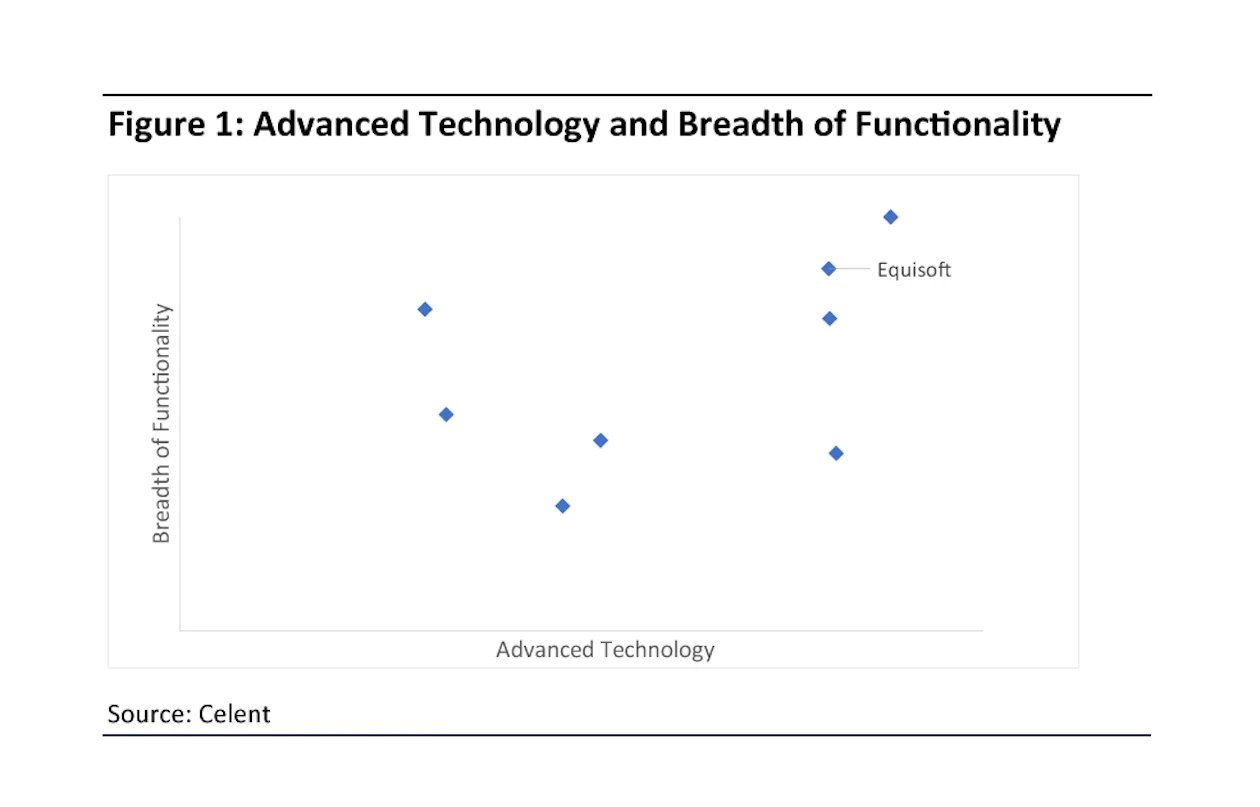
Equisoft’s insurance illustration software is acknowledged by Celent for its advanced technology and breadth of functionality, and for providing “the best experience across all illustration systems”.

.

Philadelphia, January 14, 2021 – Equisoft, a leading global provider of digital business solutions for the insurance and wealth industries, proudly announced that its insurance quote and illustration software, Equisoft/illustrate, has been recognized by Celent as one of the top-rated solutions in North America.

.

Research and consulting firm Celent analyzed 10 vendor-offered illustration systems available for life, health and annuities product carriers. The findings were published in Celent’s recent report: “Life Insurance Illustration Systems: North American Edition.”

.

New Chart ENG

.

“A life illustration system is a core piece of the sales process in life insurance,” wrote Celent’s Senior Analyst Karen Monks in the report. “Based on solid overall functionality and recent improvements that we’ve seen, we think that vendor-offered illustration systems can improve a producer’s efficiency at the point of sale and, for the investment, will also deliver significant long-term savings for the insurer.”

.Going beyond table stakes quotes and illustrations

.

As highlighted by the report, illustration tools are table stakes for life insurance carriers. Every company has a solution, whether developed in-house or sourced from a vendor, that does the required job -showing potential clients the details of what they are thinking of purchasing.

.

“Today’s insurers are looking to gain a competitive edge on any front, whether it’s speed-to-market, offering seamless experiences or product innovation. More and more see an opportunity to elevate illustrations from a cost-of-doing-business tool to a critical platform for promoting insurance products,” said Bruno Leduc, Senior Director, Digital Insurance Solutions at Equisoft. “They want a user-friendly and effective tool that will outdo what their competitors could offer.”

.

“Based on customer feedback and Celent’s review of the product, Equisoft/illustrate should be on an insurer’s short list when considering a new illustration system,”​ concluded Karen Monks in the report. “It provides the best experience we saw across all illustration systems this year.”

.

Equisoft/illustrate is a class-leading front-end solution for comparing compliant quotes and generating the most compelling illustrations to showcase insurance products. Used by top-tier companies in North America, this next-generation software is a strategic asset for insurers seeking to unlock the full potential of their growth strategy and be at the forefront of the market.

.

About Equisoft

.

Founded in 1994, Equisoft is a global provider of advanced insurance and wealth digital solutions. Recognized as a valued partner by over 75 of the world’s leading financial institutions in 15 countries, Equisoft offers innovative front-end applications, extensive back-office services and unique data migration expertise. The firm’s flagship products include a SaaS policy administration solution, CRM, financial needs analysis, financial planning, asset allocation, fund and portfolio analysis, quotes and illustrations, electronic application, agency management systems, as well as customer, agent and broker portals. Equisoft is also Oracle’s largest and most experienced integration partner for the OIPA platform. With its business-driven approach, deep industry knowledge, innovative technology, and some 500 experts based in the USA, Canada, Chile, Colombia, South Africa, India and Australia, Equisoft helps its clients tackle any challenge in this era of digital disruption.

.

12 Bruno 3

Bruno Leduc

Senior Director, Digital Insurance Solutions

Bruno has over 15 years of experience in life insurance technology. He’s an expert in digital transformation, front end implementations, and user experience.

Ameritas Selects iPipeline’s SSG Digital Platform to Enhance Life Insurance Processing for Financial Professionals

Captura de pantalla 2021-01-13 a la(s) 15.22.56

.

e-Application, Self-Service Capabilities, and Network to Optimize Financial Professional and Carrier Performance

.

Exton, PA (January 12th, 2021) – iPipeline® – a leading provider of low code cloud-based software solutions for the life insurance and financial services industry, today announced Ameritas has chosen the SSG Digital® Platform to streamline the application processing experience. Ameritas is a mutual-based provider of life insurance, financial services, and employee benefits. iGO® e-App and Maestro® Self-Service will be integrated with Swiss Re’s Magnum Pure® full-service underwriting automation to accelerate business processing, lower costs, and improve the customer experience for the Ameritas independent distribution channel. iPipeline has the life insurance industry’s largest independent distribution and carrier network within North America.

.

“In a recent Deloitte survey, 48% percent of 200 insurance executives agreed the pandemic showed how unprepared our industry was to weather this economic storm. Digital technologies are essential to succeeding in today’s contactless selling environment, and iPipeline’s low code SSG Digital platform has what it takes to power the industry forward in 2021,” said Larry Berran, CEO, iPipeline. “Using iGO e-App and Maestro Self-Service with Magnum Pure will help Ameritas to improve their financial professional and consumer experiences.”

.

“Ameritas evaluated several technology providers to find a platform that best fit our needs,” said Robert Sharp, Head of Independent Distribution at Ameritas. “iPipeline is a strong organization in the independent marketplace with integration experience and an innovative end-to-end platform. We look forward to working with iPipeline on automating our new business processes.”

To learn how you can implement iPipeline’s innovations to automate how your products are sold and processed, contact sales@ipipeline.com or call 1-800-758-0824, option 2.

.

About Ameritas
Ameritas is a marketing name for Ameritas Mutual Holding Company and its affiliated subsidiary companies, including Ameritas Life Insurance Corp. and Ameritas Life Insurance Corp. of New York. Founded in 1887, Ameritas offers a wide range of insurance and financial products and services to individuals, families, and businesses. These products and services include life insurance; annuities; individual disability income insurance; group dental, vision, and hearing care insurance; retirement plans; investments; asset management; and public finance. Securities offered through affiliate Ameritas Investment Company LLC. (AIC), member FINRA/SIPC and investment advisory services offered through the business name of Ameritas Advisory Services. AIC is not affiliated with any third-party entity mentioned herein. For more information, visit ameritas.com.

.

About iPipeline
iPipeline is a leading provider of low code, cloud-based software solutions for the life insurance and financial services industry. Through our SSG Digital, end-to-end platform, we accelerate and simplify sales, compliance, operations, and support. We provide process automation and seamless integration between every participant in our ecosystem including carriers, agents, general agencies, advisors, broker-dealers, RIAs, banks, securities/mutual fund firms, and their consumers on a global basis. Our innovative solutions include pre-sales support, new business and underwriting, policy administration, point-of-sale execution of applications, post-sale support, data analysis, reporting, user-driven configuration, consumer delivery and self-service, and agency and firm management.

.

iPipeline’s platform is used by approximately 450 carriers and fund companies, 1,400 distributors and financial institutions, and their agents and licensed advisors in a cloud-based environment. With headquarters in Exton, Pennsylvania, iPipeline has locations in Boston, Bromley (UK), Burlington (Canada), Cheltenham (UK), Dallas, Davidson, Fort Lauderdale, Huntersville, Ontario (CA), Philadelphia, Pleasanton, and Salt Lake City. Visit www.ipipeline.com.

.

###

.

For iPipeline:
Lisa Shea
Marketing
lshea@ipipeline.com
484-870-6234

Life Insurance Technology In 2020 Was Driven By Simplicity And Data

Broker World Jan 2021 1bDq-696x464

By Ken Leibow

Published in Broker World Magazine January 1, 2021


We all had to adapt to change beginning nine months ago with the pandemic. A distributor’s Agency Management System (AMS) must improve its quality of service for agents/advisors, field underwriting (exams) needs to be safe, and turning Inforce data to action is critical for advisors to manage their client’s policies. Here is an inside look on how life insurance solution providers adapted and innovated to these new challenges in 2020.


Agency Management Systems Essential for Distributors during COVID

.
Life insurance distributors in the USA and Canada faced the same challenges during COVID in 2020. I reached out to Equisoft whose Agency Management System (AMS) is the most widely used in Canada for life insurance distributors, and it is also available in the USA. I also met with OneHQ whose modern, easy-to-use CRM/AMS gained momentum in 2020.


David Nicolai, vice president, Insurance Solutions at Equisoft explains how back office automation is essential for servicing their advisors, “How do distributors stay relevant in times of accelerated change? That’s a critical question we’ve heard distributors ask so often over the past nine months. The answer, for some, is that it has been difficult—to pivot quickly and execute on a new value proposition that will enhance their ability to attract and retain the best advisors—if they are still running their business with manual, largely paper-based processes. There’s too much drag in the system. Innovation, no matter how creative their thinking is, will be hard to implement. On the other hand, we have clients who went from 100 percent paper-based to almost entirely automated and digital when they implemented the Equisoft/centralize agency management system. That made all the difference. When COVID hit and distributor staff, advisors and clients could no longer meet in person, their transition to the new reality was almost seamless. App processing, advisor communication, inforce services—all continued at pace because they didn’t rely on paper and mail. Clients received the support they needed in difficult times. Advisors appreciated the service and value their distributors were able to provide in helping them continue to meet their clients’ needs.”


Meeting with Brett Barker, Senior Account Executive at OneHQ, he provided not only information about their AMS, but client experiences during 2020. Tailored specifically for insurance distribution, OneHQ is an extremely powerful yet easy-to-use system. It’s highly configurable, replacing disjointed systems by bringing the CRM, AMS, and Compensation together plus integrating all other systems into one place. Brett explained, “Our user-friendly interface and personalized modules help give each department a dialed-in system to maximize results. As an example, a OneHQ customer recently made the move from their legacy system to OneHQ because their back office and sales teams had very little communication between systems. Wanting more data visibility for sales and back office efficiencies, the team moved to OneHQ and for the first time in years they had access to all of the information they needed within seconds. In the end, sales activity increased 20 percent and OneHQ’s innovative platform is providing better service to agents by freeing up the back office teams from running reports and answering questions.”


With the changes brought about by COVID-19 and more focus on how technology can impact sales internally and for their agents, OneHQ has witnessed a tidal wave of new clients. Their modern technology that focuses on increasing sales without sacrificing service is giving their clients an edge during these rapidly changing times. Brett continued, stating that OneHQ is increasingly seeing more of their clients beginning to offer their agents a full technology strategy starting with the CRM that integrates with their back-office system. In addition, this also makes the IMO much “stickier” with their agents. To sum it all up, Kyle J. Ginavan, CEO, OneHQ, said, “There have always been many good technology options available to insurance agents, but never a full technology strategy. While the securities industry has well-thought-out technology strategies for financial advisors, insurance distribution has typically lagged in this area. However, with COVID, we’re certainly starting to see that change.”


Exam Safety: Simplifying through Innovation

.
Underwriting is key to the life insurance new business process. For term insurance, a drop ticket with an exam still dominates the higher percentage of cases in 2020. Paramed exam companies are the front lines for underwriting. I reached out to Ryan Janeway, founder and CEO of MediPro Direct. Ryan explained that at this stage of the pandemic, protecting field medical teams and applicants requires access, innovation, and adaptation. Said Janeway, “Very few companies are positioned as effectively as MediPro Direct to actually improve customer experience during this crisis. MediPro Direct founded Vanguard Genetics LLC in 2015 to gain access to clinical and genetic testing services that can aid underwriters in policy-making decisions now and into the future. Under the current circumstances, our clinical lab association has provided immediate access to necessary PPE, as well as rapid COVID antigen testing to ensure the safety of our customers and team.”


As innovators, the teams at MediPro Direct and Vanguard Genetics helped bring rapid antigen testing to market and are now validating saliva test collection methods to simplify the collection process for these tests. Additionally, their teams have reduced manufacturing costs by up to 70 percent in order to dramatically improve public access to testing—which, combined with the distribution of vaccines, are key to getting customer business and lives back on track. Under proper credentialing, these tests can be used in the office and in the field to help ensure safety during insurance exams, clinical trials, and other medical interactions. MediPro Direct has adapted to the current environment by creating unique tools and processes such as its Tier1 Network™, to increase examiner coverage for carriers, its Quality First™ system to dramatically improve access to real-time quality data for carriers, and its RemoteID™ system for scaling and improving tele-interview processes without the need for fixed call centers.


Inforce Policy Data Turns to Action

.
As the digitization of the life insurance industry persists, the concept of shared visibility of data is becoming more relevant. Shared visibility of information across distribution partners helps to keep carriers, BGAs, and advisors all aligned on what’s working as it should and what areas have room for improvement. When it comes to inforce policy management specifically, that shared visibility is especially important. But timely exchange of information is not enough to satisfy a proactive, compliant, and efficient inforce management strategy.


Visibility of inforce data alone is table-stakes. As you continue to seek ways to not only differentiate but also provide more value to your distribution partners, you need a way to make that data and information you share with each other actionable. That’s where a platform like Proformex comes in as the right partner for you and your community. Proformex connects visibility to efficiency, simplicity, and opportunity. By aggregating data and giving everyone access to it—their platform takes that data and provides you with powerful analytics and insights that you and your distribution partners can use to make data-driven decisions that produce real-world outcomes. And there’s no manual burden involved; by automatically surfacing both risks and opportunities to you and your distribution partners, you’ll now have the ability to proactively manage potential problems and seize revenue-generating opportunities. It’s a win for everyone, from carrier to client.


Simplifying the life insurance new business experience impacts agents, distributors, carriers and consumers. Mining and analyzing life inforce data and turning it into action creates new sales opportunities for advisors to engage with their clients. COVID obviously accelerated innovation in life insurance technology in 2020. For those solution providers that have adapted and taken on the challenges head on with new innovations, they will have staying power in our industry moving forward in 2021.


No-Code – What Does It Mean?

Captura de pantalla 2020-12-29 a la(s) 15.09.46

.

What does “no-code” mean, anyway?

.

Though still a new term to many of us, the no-code phenomenon is everywhere. Laymen, civilians, and folks across industries find themselves asking, “What do they mean by no-code?” If you look it up, you might find a definition that reads something like this: “No-code technology allows users to develop rapid solutions which transform business processes and meet customer needs.” Um, it does what, now? Explain this to me in English, please.

.

Maybe this will help.

.

Consider a common scenario from twenty years ago: you hear a friend proudly proclaim they had built their own website. You think, “Hm, I didn’t know so and so could speak Java,” and of course, they couldn’t. They had merely taken advantage of early, first-generation website design programs like Dreamweaver or FrontPage. The end-result looked almost like the output of a professional, at least it did for the standard of the early 2000s.

.

The current “no-code” era is just progression of this same thing: designing applications to be do-it-yourself for the non-technically inclined masses. Dreamweaver and FrontPage were some of the first no-code programs in the mainstream. Modern no-code applications have the same pieces: drag-and-drop, clicking, drop-down-menus and template choices allowing users to create something which previously required a programmer fluent in HTML. Real world applications of no-code are all around us. You can create your own virtual storefront with Shopify or design an internal company web-app with Budibase. Today’s DIY, non-coding website designers use tools with late-generation sophistication like WordPress and Carrd.

.

The insurance realm is no exception to the no-code revolution. Third-party administrators and carriers can choose from a wide variety of insurance-specific platforms that interface with employee or customer portals based on underwriting decisions. Management Research Services (MRS) has developed an easy-to-use, yet sophisticated application that gives their clients the tools they need to manage their workflow. Their system has comparatively low maintenance costs and no coding experience is necessary for implementation.

.

At MRS, we have decades of insurance industry experience to inform the design and features of our no-code insurance services platform. Our rules engine can be customized by SMEs to accommodate even the most complex underwriting or scripting scenarios. The MRS proprietary system is cloud-hosted on Microsoft Azure to ensure state-of-the-art security, stability and scalability that is available to our partners at any time, all year round. Recent metrics show the MRS platform experiences online uptime of over 99%.

.

To learn more about how the MRS no-code platform serves their partner clients, customers, and carriers, visit www.managementresearchservices.com.

.

Verisk to Acquire Behavioral Data and Intelligence Vendor Jornaya

The acquisition will help insurers and lenders time and tailor interactions with customers and prospects, delivering better experiences and improving customer acquisition and retention

.

Verisk-acquires-Jornaya-540x360

(Image source: Jornaya.)

.

JERSEY CITY, N.J., December 15, 2020 — Verisk (Nasdaq:VRSK), a leading data analytics provider, announced today it has entered into an agreement to acquire Jornaya, a leading provider of consumer behavioral data and intelligence. The acquisition will add Jornaya’s proprietary view of consumer buying journeys to Verisk’s growing set of marketing solutions for the insurance and financial services markets.

.

Using advanced marketing techniques, customers in the property/casualty, life insurance, and lending industries rely on Jornaya’s behavioral data, lead compliance intelligence, and other solutions to drive return on investment. With this acquisition, Verisk clients will have the intelligence and agility to time and tailor interactions based on actual in-market behaviors—ensuring engagement with customers and prospects at the right time with a relevant message.


.

Ross-Shanken-founder-and-CEO-Jornaya

Ross Shanken, Founder and CEO, Jornaya.

.

“The rapid growth of competition in insurance and financial services has made it more critical than ever for businesses to help consumers find the products they need with speed and ease,” comments Doug Caccese, president, ISO Personal Lines, Verisk. “Jornaya brings unique insights to consumer buying journeys and the ability to meet the evolving needs of CMOs and marketing teams. Combined with our extensive data assets and deep domain expertise in predictive analytics and decision-support solutions, this acquisition will enhance our ability to develop innovations to help our clients refine their marketing outreach, boost customer acquisition and retention, and increase profitable growth.”

.

“Verisk has shown a strong commitment to meeting the rapidly changing needs of leading marketers with data-driven solutions, highly experienced teams, and a significant innovation pipeline,” says Ross Shanken, founder and CEO, Jornaya. “As part of the Verisk family, we’ll be able to increase our reach, improve our solutions, and help our clients grow with greater speed and efficiency by driving better customer engagement, acquisition, and retention.”

.

About Jornaya

.
Jornaya has proprietary behavioral data in markets where consumers make considered purchases, including the insurance and lending industries. Jornaya’s data helps companies and their marketing teams improve consumer engagements and drive profitable growth through a deeper understanding of their customers and prospects and their buying journeys. Leading companies use Jornaya’s data to help retain current customers, grow relationships with existing customers, and establish new relationships. For more information, visit jornaya.com.

.

About Verisk 
Verisk (Nasdaq:VRSK) is a leading data analytics provider serving customers in insurance, energy and specialized markets, and financial services. Using advanced technologies to collect and analyze billions of records, Verisk draws on unique data assets and deep domain expertise to provide first-to-market innovations that are integrated into customer workflows. Verisk offers predictive analytics and decision support solutions to customers in rating, underwriting, claims, catastrophe and weather risk, global risk analytics, natural resources intelligence, economic forecasting, and many other fields. Around the world, Verisk helps customers protect people, property, and financial assets.

.

Headquartered in Jersey City, N.J., Verisk operates in 30 countries and is a member of Standard & Poor’s S&P 500®Index. In 2018, Forbes magazine named Verisk to its World’s Best Employers list. For more information, please visit www.verisk.com.


Management Research Services and Liberty Bankers Insurance Group Unite (Case Study)!

Liberty+Case+Study

.

Management Research Services (MRS) is an industry leader in developing and delivering customized digital and automation solutions for clients and partners. Recently, MRS led efforts to streamline new business and underwriting processes for Liberty Bankers Insurance Group (LBIG) based in Dallas, Texas.

.

When the COVID-19 pandemic began, LBIG experienced an unexpected service disruption with an existing underwriting service vendor for one of their highest volume product lines. In a matter of less than a week, MRS was able to mirror the existing process, as well as refine it to improve the customer experience. This resulted in minimal disruption to the new business process.

.

Building on the success of that initial partnership, a second phase followed in June, wherein MRS developed and installed a reconfigured platform that integrated new data sources and greatly improved the customer experience. As a result of this phase, the new and improved MRS solution provided the following for LBIG:

.

• A mortality analysis of a prospective client.

• Reduction in time to see which prescription drugs are currently in market.

• A better user experience.

• Access to a reflexive list of questions on health history.

• An increase in production due to a streamlined process for agents.

• Point-of-sale features for a client.

• Real-time reporting capabilities.

• Cost savings.

• Greater efficiency in issuing a policy to a client.

.

Finally, MRS developed an e-Application (e-App) solution for LBIG in August 2020. The e-App was customized to LBIG underwriting specifications and completed an omnichannel experience for the selling agents. LBIG clients could now complete the life insurance purchasing process by utilizing one of two innovative e-signature options. This digitally enabled experience allowed a LBIG agent to sell remotely, a key feature that has proven extremely valuable in today’s market.

Ultimately, MRS served as a conduit for LBIG to modernize their processes from a manual process to a data-driven workflow.

.

Another initiative MRS spearheaded was collaborating with another one of LBIG strategic partners, TAPP Solutions. TAPP Solutions designed and built a custom mobile app to assist LBIG agents in evaluating the health risk of a prospective client. This new technology enabled a pre-underwriting check that provided an agent a rate class for the prospective client prior to the beginning the application process. Overall, the partnership between MRS and TAPP provided LBIG’s agents with a seamless tool to enhance their user experience.

.

Conclusion:

.

Over the course of the past six months, MRS was able to maintain LBIG’s current workflow, while also creating and implementing new workflows to make new business and underwriting processes more efficient. The MRS technology platform has transformed what was once a tedious process, to a process where agents and applicants can receive immediate results. The LBIG partnership with MRS has allowed the life insurance provider to work more efficiently and prepare better for the future. MRS looks forward to continuing their relationship with LBIG and together they will continue to be at the forefront of data processing in the financial services industry.

.

MRS CEO, Tim Dineen shares, “The whole project from start to finish has been very rewarding for both parties. We pride ourselves on creating solutions for our clients and we were able to do that for LBIG on multiple levels. We look forward to continuing to assist them for years to come.”

.

At MRS, we help clients transform change into a competitive advantage.

.

MRS provides a high-end technology product to life, health, and annuity insurance industries. In today’s world where “the only thing constant is change,” that original vision has been expanded to include more services and technology capabilities designed to help clients adapt quickly and in a cost-effective way. MRS has invested heavily in our technology platform to create a foundation for the next revolution in life insurance. MRS’s No-Code platform gives you all the tools needed to build a highly secure, complex application that efficiently collects voice and electronic data without writing a single line of code. The result is a vastly reduced time to market with no initial or ongoing maintenance costs making the total cost of ownership substantially lower than status quo solutions. Our platform’s ability to support powerful reflexive logic makes the MRS rules engine extremely efficient in collecting all information needed to make a point-of-sale decision. The capabilities and flexibility of our platform allow customers to use the MRS technology platform as their single solution or as a tool to support and enhance current technology solutions they already have in place. Please visit us at www.managementresearchservices.com or contact us by email at sales@mrsreps.com to learn more!

.