
The Soft Market Trap: Why Insurance CEOs Are Sounding the Alarm on Discipline
The U.S. insurance market is entering one of those deceptive periods where everything looks fine until it isn’t. Capital is strong. The economy is humming. Technology investments are accelerating. But beneath that surface stability, senior executives running some of the largest operations in the Americas are watching a more troubling pattern emerge: just as structural pressures are hardening across multiple lines, parts of the market are beginning to soften.
It’s a dangerous combination. Catastrophe losses aren’t just coming from headline-grabbing hurricanes anymore. Secondary perils are hitting multiple carriers simultaneously in ways that traditional models struggle to capture. Legal system abuse is quietly adding billions to liability lines while claims severity continues its upward march. Climate has moved from boardroom talking point to daily underwriting reality and the talent exodus that’s been predicted for years is now visibly thinning the ranks of experienced decision-makers.
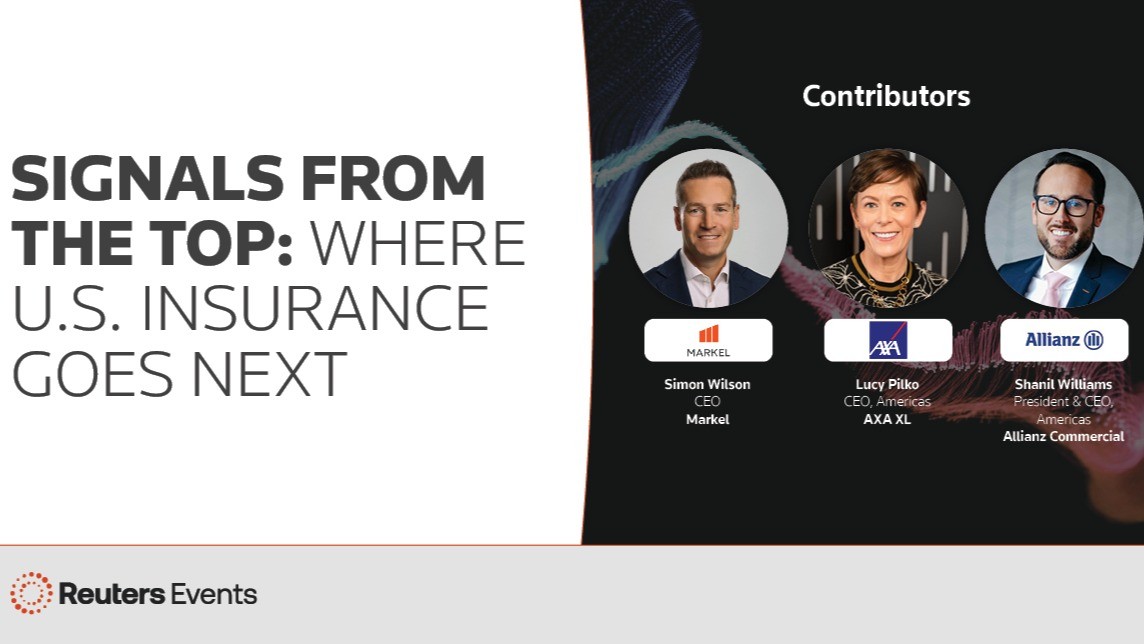
What makes this moment particularly precarious is the temptation. When market conditions ease, the instinct to chase volume becomes almost irresistible, but the executives shaping strategy at the top of major carriers are delivering a blunt message. As Simon Wilson, CEO of Markel, puts it: “The winners will be the carriers that stay sharp on risk selection, rate adequacy, and portfolio management rather than chasing volume.”
The Discipline Question
Wilson frames the stakes starkly: external pressures like economic shifts, legal volatility, and geopolitical events are no longer temporary disruptions. “Some players still treat these forces as temporary instead of recognizing that they are becoming lasting features of the environment,” he warns. “At the same time, a softening market provides the temptation for some insurers to ease their discipline just as claims severity continues to rise.”
The property market presents the clearest stress test. Wilson is direct about the path forward: “The way to stay relevant in higher risk regions is to be transparent about appetite and to price for the peril while helping customers manage it.”
AI: Beyond the Pilot Trap
Wilson describes Markel’s approach to artificial intelligence: “We’ve taken a different path: equip the whole organization so people are comfortable with the tools, then back specific use cases that change economics.” That means reducing review time from days to minutes and expanding addressable deal sizes without compromising standards. “Transformation happens when AI is embedded in everyday decision making across the business.”
Lucy Pilko, CEO of Americas at AXA XL, reinforces this point. “The key is to embed these AI capabilities into the core operational workflows rather than treating them as isolated experiments. When AI is fully integrated, it enables continuous improvement and innovation.”
The Trust Deficit
Pilko identifies trust as one of the industry’s biggest blind spots. “When clients feel like the claims process isn’t transparent or fair, it hurts the relationship and makes it harder for us to work together when it really counts. If trust erodes, it weakens the industry’s role in helping transfer risk and protect our economy.”
The consequences extend beyond customer relationships. “If our industry’s reputation takes a hit, it’s going to be tougher to attract the next generation of talent, needed for innovation and growth, for our future,” Pilko warns.
Shanil Williams, President and CEO of Americas at Allianz Commercial, describes how the industry’s value proposition must evolve: “We have gone from simply paying claims after a disaster strikes to comprehensive advance risk consulting and management. It is about working with CEOs, boards, and risk managers to develop a ‘no regrets’ approach to future-proofing their enterprises from business disruption perils.”
What Comes Next
Williams highlights what he sees as the industry’s most underestimated challenge: “We have to prioritize and confront the accelerating interconnectedness of risk. Geopolitical tensions, economic volatility, technological disruption, and climate pressures are no longer isolated threats; they are compounding forces that increasingly amplify one another.”
The fundamentals are solid. The question is whether the industry will use this moment of relative stability to prepare for what’s ahead, or whether competitive pressure will erode discipline just as structural risks are hardening.
For the full conversation with insurance leaders on navigating market pressures, managing interconnected risks, and where the industry goes next, download the complete report: Signals From The Top: Where US Insurance Goes Next.