
Moving EPL Risk Management Upstream: How Insurers Can Detect Workforce Risk Before Claims Start
A conversation with Dr. Justin Velton of GoCulture on workforce risk prevention, AI, and why the future of EPL may depend on earlier intervention rather than stronger defense.
Employment Practices Liability has traditionally been managed after the damage is already underway. Claims are filed, attorneys are engaged, and organizations move into defense mode. But what if the industry could identify workforce risk earlier—before harassment claims, retaliation cases, reputational fallout, and retention crises escalate into major losses?
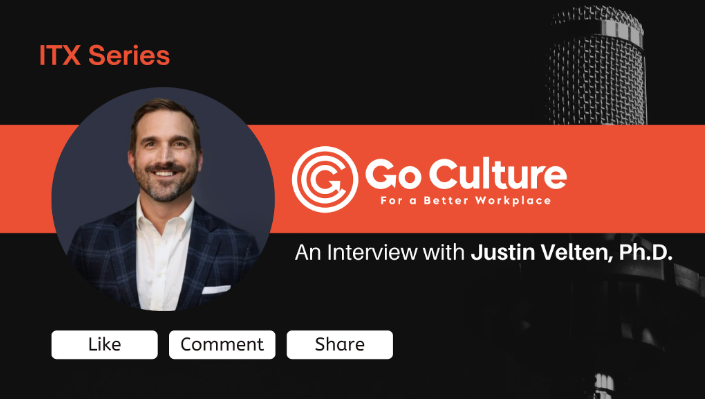
In this conversation, Ken, Founder and CEO of InsurTech Express, speaks with Dr. Justin Velton, Co-Founder of GoCulture and creator of TeamShield, about a different model: moving EPL risk management upstream. Their discussion explores how workforce communication patterns, leadership friction, disengagement, and other early indicators can help insurers, brokers, and employers shift from reactive claims handling to proactive prevention.
Edited Written Interview
Ken: You’ve spent years studying workforce communication and engagement across federal and enterprise organizations. What led you to view this as a risk management issue rather than just an HR topic?
Dr. Justin Velton: My background is in higher education and communication research. I spent many years studying human engagement, including cross-cultural communication, and that work eventually led us to identifying measurable indicators of workforce breakdown. We began to see patterns—signs that a workforce issue was developing well before it surfaced as a formal complaint or organizational crisis.
That is what shifted the lens for me. This was not just an HR issue. It was a risk issue. Traditional HR functions are important, of course, but they often become involved after something has already happened. We became interested in whether there was a way to recognize the warning signs earlier and intervene before a harassment claim, retaliation case, or reputational problem fully materialized. In insurance terms, the question became: can we move from mitigation to prevention?
Ken: Why do you think the industry has historically focused more on defending EPL claims than preventing them?
Dr. Justin Velton: For a long time, the assumption has been that these situations simply cannot be prevented. The belief has been that workplace conflict, harassment claims, or leadership-related issues are inevitable, so the best response is to prepare for the legal and financial consequences once they happen.
That mindset has shaped how organizations and insurers respond. They wait until someone says, “This has been happening for months” or “I’ve been harassed for two years,” and only then does the formal process begin. What we are saying is that there are often indicators much earlier in the cycle. With the right data, the right process, and now the help of AI, organizations can identify those signals upstream and act before the issue becomes a claim.
That matters not only from a loss ratio standpoint for carriers, but also from a business standpoint for employers. Preventing disruption inside the workforce is valuable in its own right.
Ken: What kinds of early signals tend to show up months before workplace claims or toxic culture allegations?
Dr. Justin Velton: In many cases, the signs are present long before anyone uses formal language like harassment, retaliation, or toxic workplace. The discomfort is there, but people often do not know how—or do not feel safe enough—to report it through traditional channels.
That is one of the limitations of whistleblower systems. They can be important, but they are often perceived as the “big red button.” By the time someone uses that channel, the situation usually feels severe, public, and irreversible. Many employees are reluctant to take that step early because of stigma, fear, or uncertainty about whether what they are experiencing is serious enough to report.
What is needed is a quieter, more proactive mechanism—something that gives employees regular opportunities to share what is happening before the issue explodes. If organizations can detect recurring concerns, communication breakdowns, leadership friction, disengagement, or signs of unsafe culture early enough, they have a chance to correct course rather than defend fallout later.
Ken: How can technology and AI help carriers and employers detect those signals earlier?
Dr. Justin Velton: Today, much of the insurance approach to EPL-related exposure is still backward-looking. Carriers may ask whether an organization has had prior issues, whether it has been a difficult account, or whether there is a history of claims. That is useful, but it is post hoc. It tells you what has already gone wrong.
Technology creates the possibility of something better: predictive visibility. Instead of only looking at historical claims activity, insurers and employers can begin to identify whether an organization is showing signs of elevated future risk before coverage is priced, placed, or renewed.
There is also a second benefit that matters a great deal in the legal context: defensibility. If a claim is made, organizations and their counsel need more than policy language and training records. They need credible evidence about what was or was not happening inside the workforce over time. Non-identifiable data that shows long-term patterns can help separate an isolated allegation from a broader pattern—or confirm that there really was a persistent problem. That changes the quality of both prevention and defense.
Ken: What role could insurtech platforms play in bringing this into the broader risk ecosystem?
Dr. Justin Velton: That is where the opportunity becomes very interesting. There are already many strong vendors in HR, compliance, and harassment training. But most of those solutions are still centered on education, documentation, or response. They are not built to recognize emerging workforce risk in a predictive way.
What insurtech platforms can do is integrate workforce insight as a new layer inside broader risk management ecosystems. That means not just training employees or documenting processes, but actually surfacing where risk may be forming, where it is concentrated, and what action should be taken before an incident becomes a legal or financial event.
We have seen how powerful that can be. In one case involving a dispersed workforce of roughly 200 employees, the organization had been experiencing more than 20 harassment claims per year. After implementing this type of assessment and making relatively modest policy and leadership adjustments, the number dropped from 22 claims per year to zero year over year. That is meaningful for the organization operationally, culturally, and financially. And at scale, that kind of capability can become highly relevant to carriers serving thousands of commercial customers.
Ken: If insurers started treating workforce risk more like cyber risk or workplace safety, how might underwriting and risk management change?
Dr. Justin Velton: That comparison is exactly the point. Insurers already invest in tools that help prevent water damage, fire loss, and cyber incidents. They provide sensors, monitoring tools, and training because prevention is more efficient than claims handling. Yet when it comes to people-related risk, there has historically been a gap. Outside of mandatory harassment training, very little is designed to detect and reduce workforce breakdown before it turns into a loss.
Workforce risk prevention fills that gap. It does not replace other kinds of risk prevention—it adds a missing dimension. And in practice, workforce feedback often reveals more than just interpersonal tension. Employees may also surface concerns related to safety, supervision, or operational issues. That can make this kind of insight valuable not only for EPL-related exposure, but potentially for other lines where workplace conditions matter.
From an underwriting and client management perspective, that opens the door to a more informed, more preventive model of risk selection and risk support.
Ken: How can brokers and carriers benefit by helping clients address workforce issues earlier?
Dr. Justin Velton: There is a practical business advantage here. Insurance is competitive, and clients are always evaluating cost, relationship value, and differentiation. If a broker or carrier can offer more than a policy—if they can help reduce workforce friction, lower the likelihood of major claims, and make the client’s organization easier to run—that creates real stickiness.
It becomes a service that is not just about transferring risk, but about reducing pain inside the business. That is valuable to employers, valuable to brokers, and valuable to carriers. It is one of those rare cases where prevention can create a genuine win across the chain.
Ken: Looking ahead, what should leaders in the insurtech ecosystem be watching over the next five years?
Dr. Justin Velton: AI will continue to reshape how organizations interact with data. We are moving away from static dashboards and toward systems where leaders can have more direct, conversational access to what their data is saying. That makes workforce intelligence more accessible and more actionable.
At the same time, the EPL environment is becoming more severe. Social inflation is raising both the frequency and the size of claims. What may once have been handled as a relatively contained issue can now become a high-dollar, high-visibility event. That is one reason this area is getting more attention. Carriers are seeing that these claims are becoming more painful, and organizations are recognizing that waiting until the legal stage is too late.
Over the next several years, I think leaders will be watching for solutions that do two things well: help prevent workforce risk earlier, and provide stronger data when claims do occur. The organizations that can do both will be in a much stronger position.
As EPL claims become more frequent, more visible, and more expensive, the industry’s traditional defensive posture is likely to come under increasing pressure. The bigger opportunity may lie not in responding better after the fact, but in recognizing workforce risk sooner—before a workplace issue becomes a formal claim, a reputational crisis, or a costly loss event. That is the shift this conversation makes clear: the future of EPL may depend on moving prevention upstream.
Visit goculture.com